
香港新投资移民计划
新资本投资者入境计划资料
官网: 新资本投资者入境计划 New Capital Investment Entrance Scheme
- 计划规则及文件
8.2(ii) 獲許金融資產之間的轉換
出售原有資產的立約日期 與 購入再投資項目資產的立約日期不得相隔超過 14 個公曆日;8.2 (ii) Permissible financial assets to Permissible financial assets
Not more than 14 calendar days may elapse between the date of the contract for the sale of the asset being sold and the date of the contract for the purchase of the reinvestment asset. - 常见问题
申请条件
申请人须属于以下其中一种类别:
- 外国国民
- 中国籍而已取得外国永久性居民身份的人士
- 澳门特别行政区居民
- 台湾华籍居民
净资产:
申请人须证明在提出净资产审查申请日期前六个月的整段期间内,一直绝对实益拥有市值不少于3,000万港元(或等值外币)净值的净资产(与家庭成员共同拥有的资产中,由申请人绝对实益拥有的份额亦会获考虑),以符合净资产规定。
申请程序
- 净资产审查
提交申请,并附上由执业会计师签发的履行规定文件以证明申请人符合净资产规定
- 原则上批准
提交入境申请及符合净资产规定审查证明书。如获给予“原则上批准”,可获发入境签证/进入许可,以访客身份来港逗留不超过180天,在指定期限内作出已承诺的投资。
- 投资规定审查
提交申请,并附上由执业会计师签发的履行规定文件以证明申请人符合投资规定。
- 正式批准
提交符合投资规定审查证明书,以继续入境签证/进入许可申请。如获给予“正式批准”,可获准在香港逗留不多于24个月。
- 符合投资管理规定
在获得正式批准的首个周年日后及在其后每个周年日后,提交由执业会计师签发的履行规定文件以证明投资者符合投资管理规定。
- 持续符合投资管理规定/延长逗留期限
提交申请,以获核实是否持续符合投资管理规定。
提交申请,以延长逗留期限不多于3年。其后延长逗留期限的申请,亦须跟从相同的申请程序。
- 在香港永久居留/无条件限制逗留
在香港连续通常居住不少于7年并符合《入境条例》(第115章)订明的任何其他相关规定的情况下可申请成为香港永久性居民;
或在连续不少于7年符合新计划规定而未能符合在香港连续通常居住的规定下,可在7年期满后申请在香港无条件限制逗留。
不管是成为香港永久性居民或者申请在香港无条件限制逗留,只要申請獲批,就可自由處置按本計劃投資的獲許投資資產。
获许投资资产
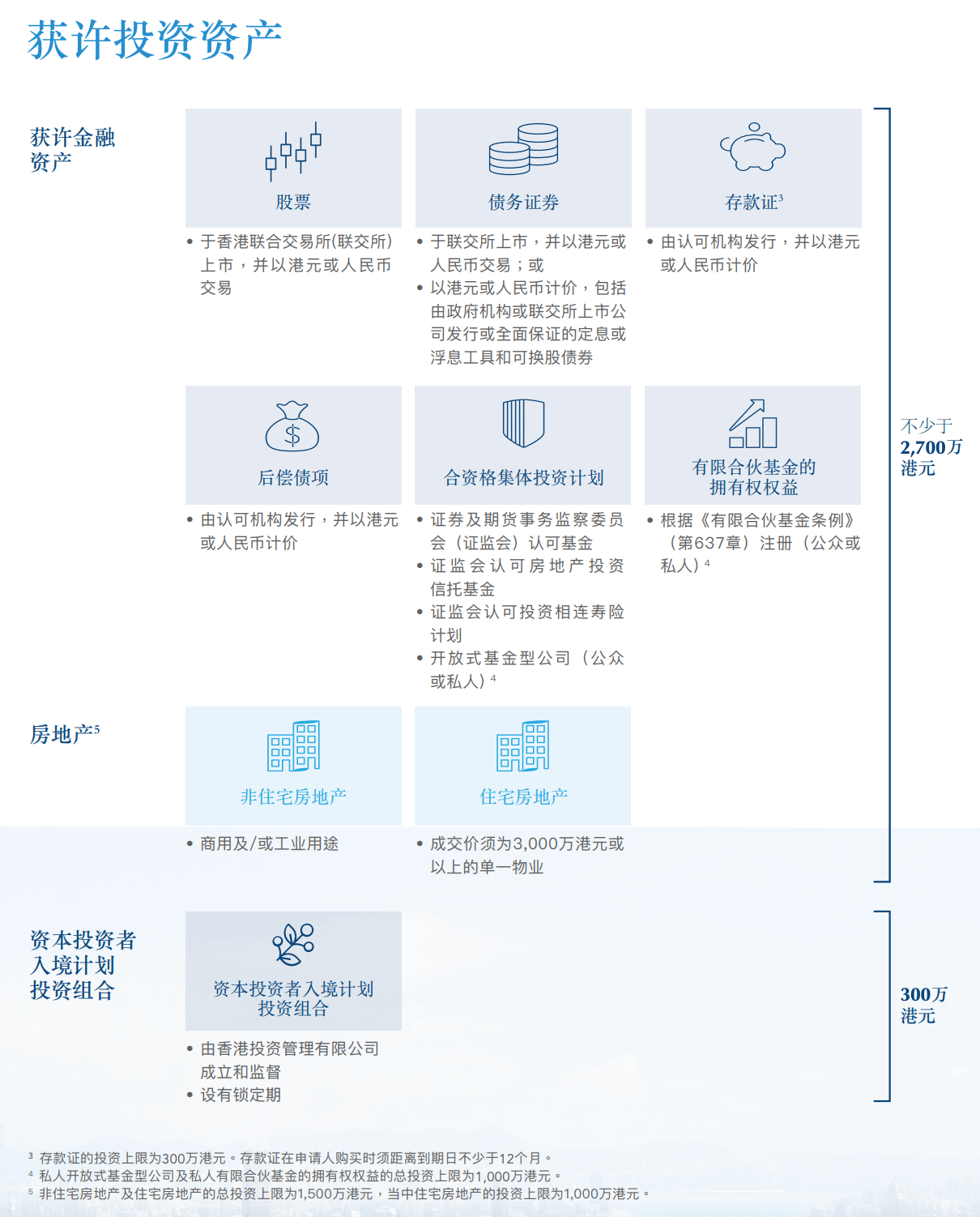
- 资本投资者入境计划投资组合: 香港投资管理有限公司
- 债券: 香港交易所-债务证券
- 合资格集体投资计划: 香港证监会「新资本投资者入境计划」下的合资格集体投资计划列表
1、指定金融中介机构
每一申请人只可委聘最多三家金融中介机构,银行、券商、保险公司各一家。
2、申请人在投资亏损时需否投入资金以填补差额?
若申请人的获许投资资产的总市值降至低于3,000万港元,或甚至完全亏损,申请人无须投入资金以填补当中的差额。
3、当投资项目的价值超过/增长至高于3,000万港元的最低投资门槛时,申请人可否套现差额? 申请人可否提取从获许投资资产而得的现金股息收入及利息收入等?
若申请人的获许投资资产的市值超过/增长至高于3,000万港元,申请人不可提取额外资产/资本增益。惟申请人可提取从获许投资资产而得的现金股息收入、利息收入及租金收入。
4、可否在指定帳戶進行保證金(孖展)交易?
否。在指定帳戶內的所有投資一概不得以孖展形式進行交易。
5、在购买、处置或变卖获许投资资产的过程中招致的支出会被计算入已承诺的投资吗?
在购买、处置或变卖获许投资资产的过程中招致的一切收费、费用、佣金、印花税、税项、征费及其他所有的支出不会获计算入已承诺的投资。
金融机构的实际系统设置为了符合香港投资推广署(InvestHK)的要求,负责托管 CIES 资产的银行或券商在系统设计上遵循以下强制逻辑:
- 隔离账户: 你的 3,000 万会被锁在一个专属的 CIES Investment Account 中。
- 交易费用外扣: 当你在该账户操作买卖时,系统禁止直接从这 3,000 万里扣除印花税和佣金。银行会强制你关联一个普通的港币活期账户,从你的普通账户扣除手续费。
投连险通常有初始费用,但为了符合 CIES 要求,保险公司往往会设置 “CIES 专用保单级别”。这意味着保单的“名义价值”必须锁定在 3,000 万。
对于投连险保单内部收取的行政费(Administrative Fee)、管理费(Management Fee)或保险成本(Cost of Insurance),投资者通常不需要额外自筹资金去“补齐”这些扣款。
在《新资本投资者入境计划规则》中,监管的重点是资产的 “转换环节”(Switching) ,而不是 “持有环节”的资产减值。
无论您选择券商还是保险,关键在于:绝不能在 CIES 专户内部通过“扣除资产”来付账。
- 券商: 准备一个副卡/备用金账户扣费。
- 保险: 选择专门针对 CIES 设计的、零转换费的投连险产品。
Agreed-Upon Procedures (AUP)
Agreed-Upon Procedures (AUP) Under the New CIES: What Investors Need to Know
9 AUP Reports Required Under the New CIES
The New Capital Investment Entrant Scheme requires nine distinct AUP reports, each serving a different purpose across the application lifecycle.
Net Asset Assessment AUPs (Pre-Approval Stage)
These verify HK$30M net assets and six-month continuity before submission.
- Net Asset Summary Verification
Confirms the applicant holds HK$30 million net assets, including cash, securities, real estate, private equity, and other assets.
- Six-Month Continuous Ownership Verification
Verifies that the assets forming the HK$30M were continuously held across the required six-month period with no breaks.
- Supporting Document & Valuation Authentication
Authenticates all ownership proofs, valuation reports, statements, loan records, audited accounts, and corporate documents.
Investment Requirement AUPs (Approval-in-Principle → Formal Approval)
These verify the HK$30M committed investment.
- Committed Investment Verification
Confirms the applicant invested ≥ HK$30M into Permissible Investment Assets within the required timeframe.
- Permissible Asset Classification Verification
Checks that invested assets comply with strict CIES rules, including caps on:
- Certificates of Deposit (HK$3M)
- LPFs / private OFCs (HK$10M)
- Real estate (HK$15M total / HK$10M single residential unit)
- Investment Funds Source & Flow Review
Traces all funds used for the investment, ensuring they flowed through the designated intermediary account, with 100% of disposal proceeds reinvested.
Portfolio Maintenance AUPs (Post-Approval → Annual Renewals)
These ensure compliance across the full holding period (usually 7+ years).
- Annual Portfolio Compliance Verification
Confirms the portfolio meets the HK$30M requirement every year and remains in eligible asset classes.
- Annual Disposal & Reinvestment Verification
Verifies all disposals, reinvestments, and asset movements comply with ring-fencing rules (i.e., full proceeds reinvested).
- Annual Supporting Document & Evidence Review
Authenticates updated annual statements, valuations, corporate documents, and real estate ownership proofs.
Common Mistakes That Cause New CIES AUP Rejections
Missing or Inadequate 6-Month Net Asset Evidence
Non-Compliant Valuation Reports for Real Estate
Investing Through Non-Eligible Financial Intermediaries
Incorrect Calculations of Investment Caps
Non-Compliant Real Estate Purchases
Failure to Reinvest 100% of Sale Proceeds
Under CIES Rules:
All sale proceeds — without deductions — must be fully reinvested into Permissible Investment Assets.
Common errors include:
- Deducting fees or charges before reinvestment
- Holding surplus cash outside designated accounts
- Reinvesting only the net amount after FX conversions
Incomplete Foreign Currency Documentation
Holding Company Non-Compliance
Date Inconsistencies Across Documents
Incorrectly Certified True Copies
截止2025年4月30日的投资金额分布
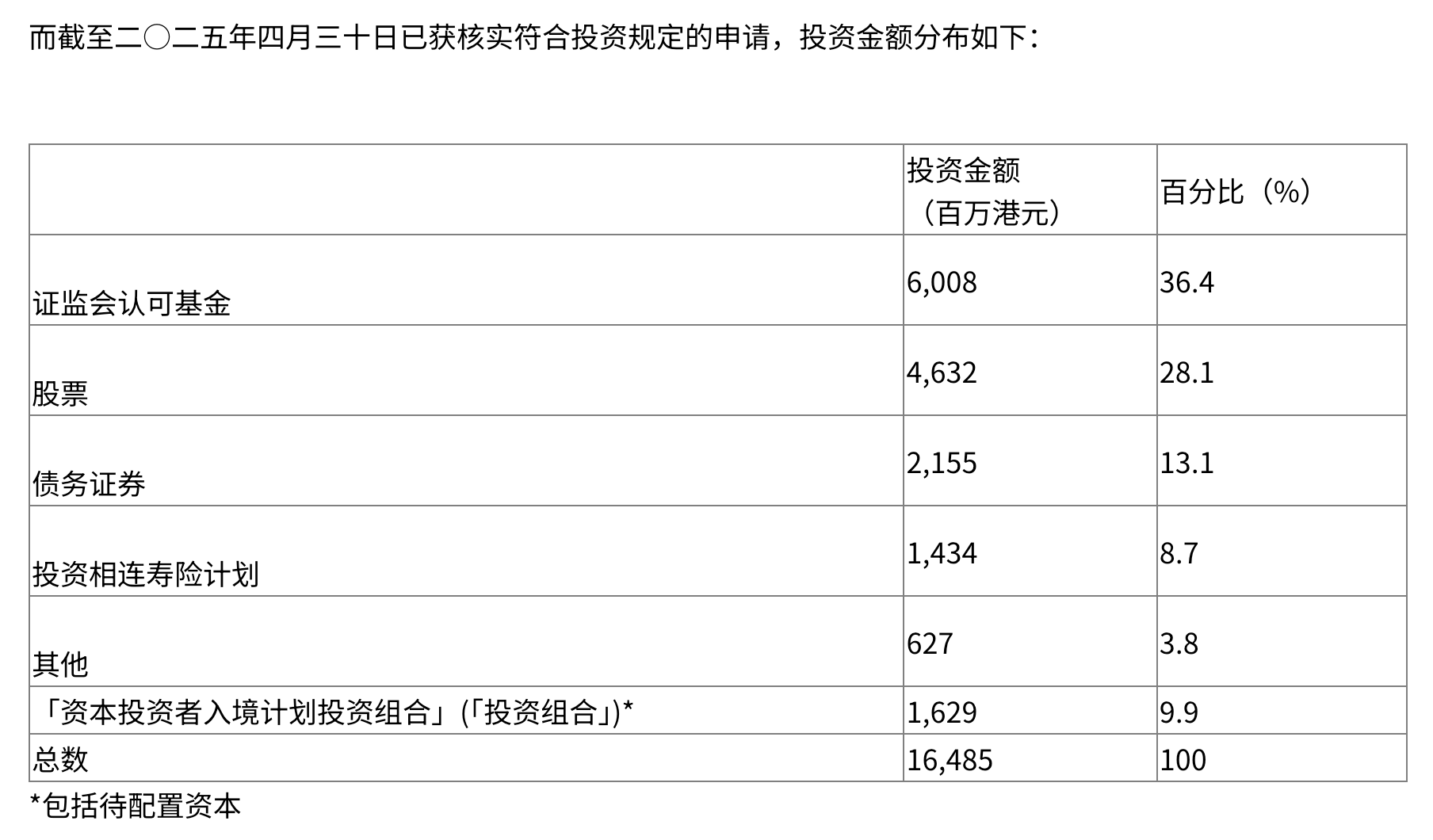
Source: 「新资本投资者入境计划」首年回顾 已获超过1 200宗申请 预计为港吸资逾370亿